
Certifications
Technical documentation and compliance
Every Klarity glass is backed by a technical data sheet, a declaration of conformity for food contact materials (MOCA) and certificates of analysis issued by an accredited laboratory. Here you will find a summary of each document and the full files to download.
Technical data sheet
The eleven models in the range
All glasses are made from transparent SMMA (styrene methyl methacrylate), a brilliant, shatterproof plastic material. Their structure and wall thickness make them suitable for reuse and for short-cycle dishwashing. Tolerances: ± 5% on weight and dimensions.
| Model | Code | Article | Usable capacity | Weight | Diameter | Height |
|---|---|---|---|---|---|---|
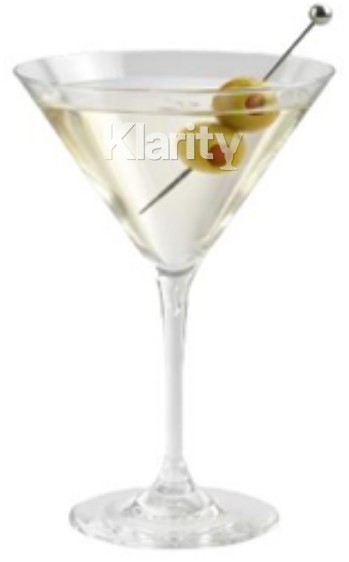 Martini Martini | GL001 | UMARTINIGLASS | 150 ml | 88 g | 11.6 cm | 17.1 cm |
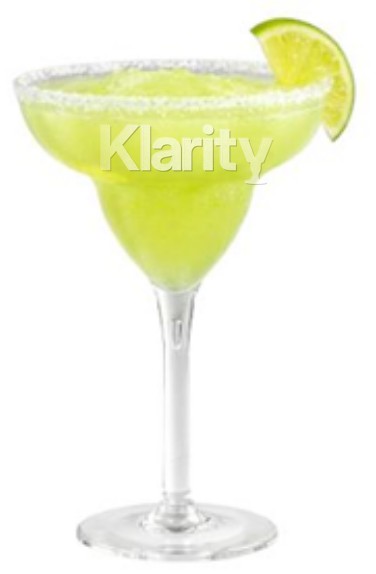 Margarita Margarita | GL002 | UMARGARITACOCKTAIL | 200 ml | 105 g | 12.3 cm | 18 cm |
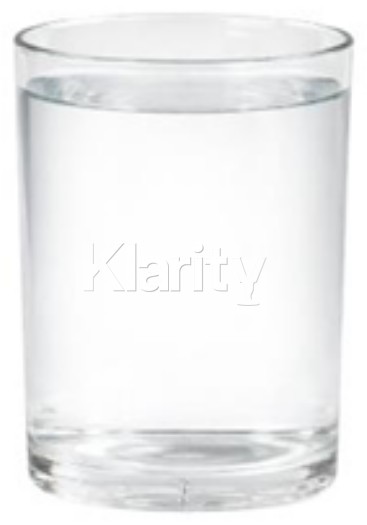 Water Water | GL003 | UWATERGLASS | 260 ml | 85 g | 8.2 cm | 9.6 cm |
 Rock Rock | GL004 | UROCKGLASS | 230 ml | 98 g | 9.1 cm | 9.2 cm |
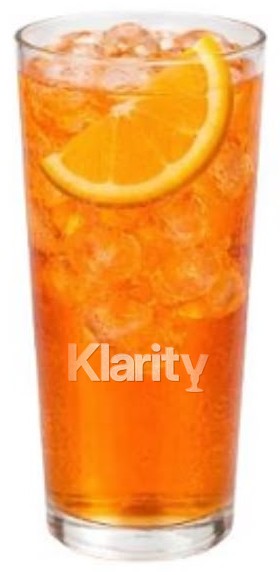 Highball Tumbler Highball Tumbler | GL005 | UHIGHBALLTUMBLER | 400 ml | 117 g | 7.2 cm | 16.4 cm |
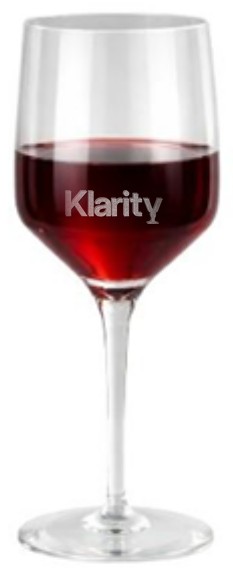 Wine Wine | GL006 | UWINEGLASS | 200 ml | 172 g | 7 cm | 20.3 cm |
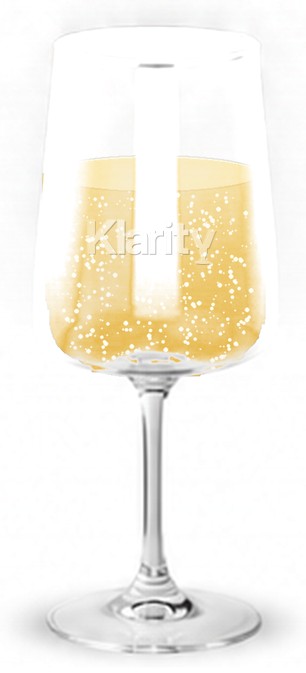 Omnia Omnia | GL011 | GL011 | 380 ml | 252 g | 8.5 cm | 21 cm |
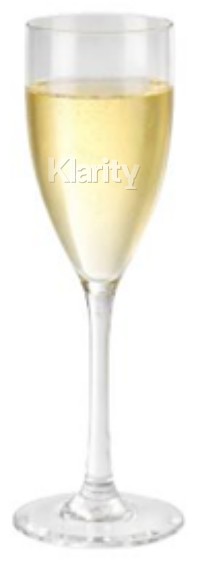 Flute Flute | GL007 | UFLUTEGLASS | 120 ml | 72 g | 5.7 cm | 21.8 cm |
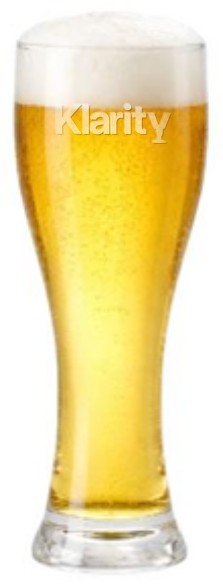 Standard Pilsner Standard Pilsner | GL008 | UPILSNERGLASS | 500 ml | 220 g | 8 cm | 22.7 cm |
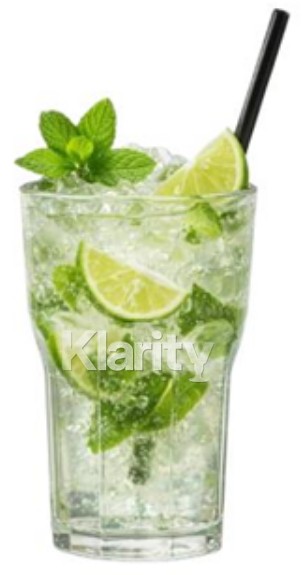 Mojito Mojito | GL009 | UMOJITOGLASS | 500 ml | 87 g | 9.8 cm | 14 cm |
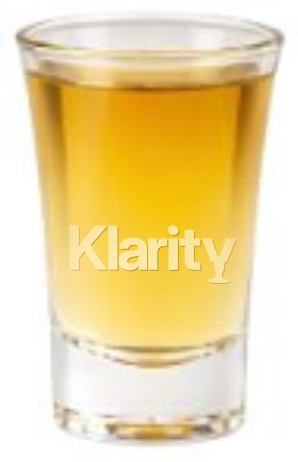 Shot Shot | GL010 | USHOTGLASS | 25 ml | 25 g | 4.4 cm | 6.5 cm |
Features common to the whole range
- Material
- Transparent SMMA
- Colour
- Transparent
- Cold resistance
- Yes
- Heat resistance
- Up to 70 °C
- Washing
- Dishwasher, short cycles · wash before use
- Recommended use
- Long drinks, soft drinks, cocktails, beer, beverages
- Markets
- Ho.Re.Ca., B2B, retail, events
- Environmental labelling
- OTHER 07 — plastic collection
- Origin
- Made in Italy
Advantages
- Resistant to cold and to heat up to 70 °C
- Safe environments: no risk of breakage
- Brilliant and transparent, just like glass
- Lower operating costs and higher profits
- High-quality raw material
- Reusable
MOCA declaration of conformity
Approved for food contact
With the M.O.C.A. declaration of conformity (Materials and Objects in Contact with Food), Unika Srl — the group company that manufactures the glasses — declares that the eleven articles in the range, intended to come into contact with cold, alcoholic and hot beverages, comply with European and Italian legislation.
- Issued by
- Unika Srl — Via 1° Maggio 165/A, 30022 Ceggia (VE), Italy
- Revision
- Rev. 00 of 2 March 2026
- Material
- Transparent SMMA
- Contact surface
- Inner surface of the glass only
Applicable legislation
- Regulation (EC) No 1935/2004
- Regulation (EC) No 2023/2006
- Regulation (EU) No 10/2011
- Regulation (EU) 2020/1245
- Regulation (EU) 2025/351
- Regulation (EU) 2022/1616
- Italian Ministerial Decree of 21 March 1973, as amended
Test conditions (reasonably foreseeable use)
Overall and specific migration with food simulants B (3% acetic acid), C (20% ethanol) and D1 (50% ethanol), for 2 hours at 70 °C and for 30 minutes at 40 °C. Surface-to-volume ratio of 6 dm² per kg of simulant.
Outcome
- The material contains no substances subject to restrictions under the legislation cited and complies with the overall migration limits under the test conditions.
- Bisphenol A: < 0.01 mg/kg (EPA 3550C 2007 + EPA 8270E 2018).
- No "dual use" additives (Regulations (EC) No 1333/2008 and 1334/2008).
- The articles must be washed before use. The certificates of analysis are available to the competent authorities.
Certificates of analysis
Laboratory testing
Migration tests were carried out by an accredited laboratory on samples of transparent SMMA glasses manufactured by Unika Srl (sampling 23 January 2026; analyses completed between 30 January and 11 February 2026). All the parameters examined fall within the limits of Regulation (EU) No 10/2011.
| Report No. | Test | Simulant | Conditions | Result | Limit |
|---|---|---|---|---|---|
| 286 F 2026 | Overall migration (Art. 12 Reg. (EU) 10/2011 · Italian M.D. 21/03/1973) | B — 3% acetic acid | 30 min at 40 °C | < 1 mg/dm² | 10 mg/dm² |
| 287 F 2026 | Specific migration: metals and primary aromatic amines (Annex II Reg. (EU) 10/2011) | B — 3% acetic acid | 30 min at 40 °C | All below the limits | Annex II |
| 288 F 2026 | Overall migration (Art. 12 Reg. (EU) 10/2011 · Italian M.D. 21/03/1973) | C — 20% ethanol | 30 min at 40 °C | 5.3 mg/dm² | 10 mg/dm² |
| 289 F 2026 | Specific migration: metals and primary aromatic amines (Annex II Reg. (EU) 10/2011) | C — 20% ethanol | 30 min at 40 °C | All below the limits | Annex II |
| 290 F 2026 | Overall migration (Art. 12 Reg. (EU) 10/2011 · Italian M.D. 21/03/1973) | D1 — 50% ethanol | 30 min at 40 °C | < 1 mg/dm² | 10 mg/dm² |
| 291 F 2026 | Specific migration: metals and primary aromatic amines (Annex II Reg. (EU) 10/2011) | D1 — 50% ethanol | 30 min at 40 °C | All below the limits | Annex II |
| 292 F 2026 | Bisphenol A (Annex I Reg. (EU) 10/2011 · EPA 3550C + 8270E) | — | — | < 0.01 mg/kg | — |
| 293 F 2026 | Overall migration (Art. 12 Reg. (EU) 10/2011 · Italian M.D. 21/03/1973) | B — 3% acetic acid | 2 hours at 70 °C | < 1 mg/dm² | 10 mg/dm² |
| 294 F 2026 | Specific migration: metals and primary aromatic amines (Annex II Reg. (EU) 10/2011) | B — 3% acetic acid | 2 hours at 70 °C | All below the limits | Annex II |
| 295 F 2026 | Overall migration (Art. 12 Reg. (EU) 10/2011 · Italian M.D. 21/03/1973) | C — 20% ethanol | 2 hours at 70 °C | < 1 mg/dm² | 10 mg/dm² |
| 296 F 2026 | Specific migration: metals and primary aromatic amines (Annex II Reg. (EU) 10/2011) | C — 20% ethanol | 2 hours at 70 °C | All below the limits | Annex II |
Specific migration determined for: aluminium, antimony, arsenic, barium, cadmium, chromium, cobalt, copper, europium, gadolinium, iron, lanthanum, lead, lithium, manganese, mercury, nickel, terbium, zinc (UNI EN ISO 22036:2024) and primary aromatic amines (ISS IOP-ER-02). Conclusion of every certificate: “For the parameters examined, the sample falls within the applicable limits.”
The official documents are issued in Italian. English versions are courtesy translations; in case of discrepancy the Italian original prevails.